Reliable AI for high-stakes decisions

Building AI that can listen across time, data, and lived experience.

I develop trustworthy multimodal learning systems for longitudinal data. At the Kovacheva Lab, led by Vesela Kovacheva, MD, PhD, my current work focuses on maternal safety and clinical decision support. I join language, time-series, waveform, imaging, and health-record data to build models that are useful, rigorous, and human-centered.

35+Peer-reviewed publications
2026Postdoctoral fellow at Harvard
4.0PhD in Computer Engineering

01 / Research focus

Multimodal AI that stays meaningful in the real world.

My work investigates how to make machine learning systems generalize across people, settings, and time. I am especially interested in models that connect qualitative narratives with quantitative trajectories while remaining interpretable and dependable in consequential settings.

  • Clinical AI & maternal safetyPredictive models for hypertensive crises, hemodynamic instability, hemorrhage, and ICU admission using EHR, waveform, genetic, imaging, and text data.
  • Longitudinal language modelingLanguage-model representations for forecasting behavioral, emotional, and learning-related change over time.
  • Reliable multimodal learningCross-distribution evaluation, missing-data robustness, uncertainty-aware modeling, and clinically meaningful AI.

02 / Current work

From signals to safer care.

Maternal health

Working with the Kovacheva Lab to use multimodal clinical data for earlier identification of acute maternal risk and safer care at the bedside.

Human trajectories

Modeling engagement, confidence, and behavior from longitudinal experiential data with language and time-series methods.

Trustworthy deployment

Studying generalization, failure modes, and interpretation so models can earn their place in real workflows.

03 / Selected methods

Turning trajectories into useful representations.

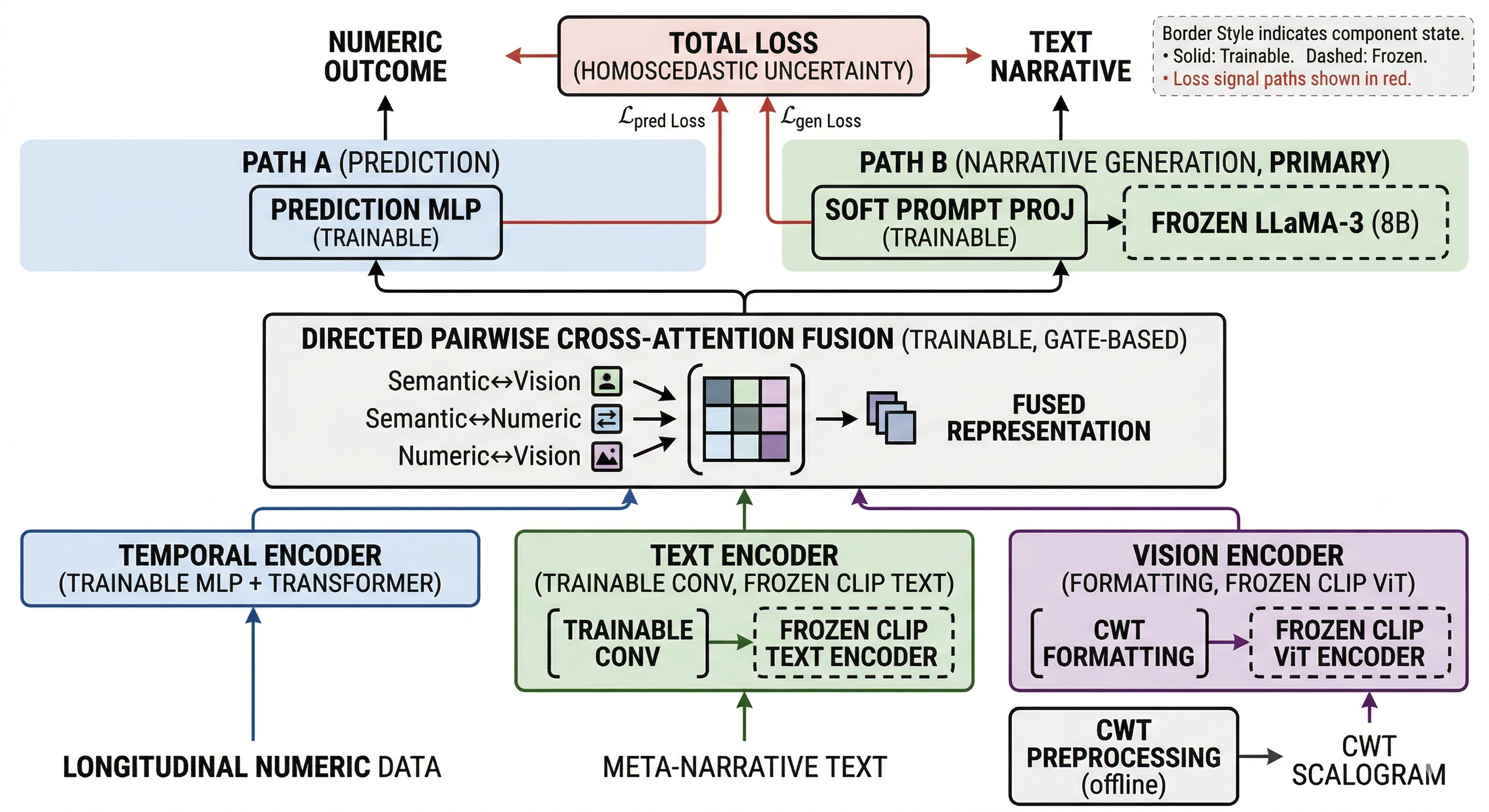
Two examples of the research systems I have developed for modeling longitudinal experiential data, combining structured signals with language and visual representations.
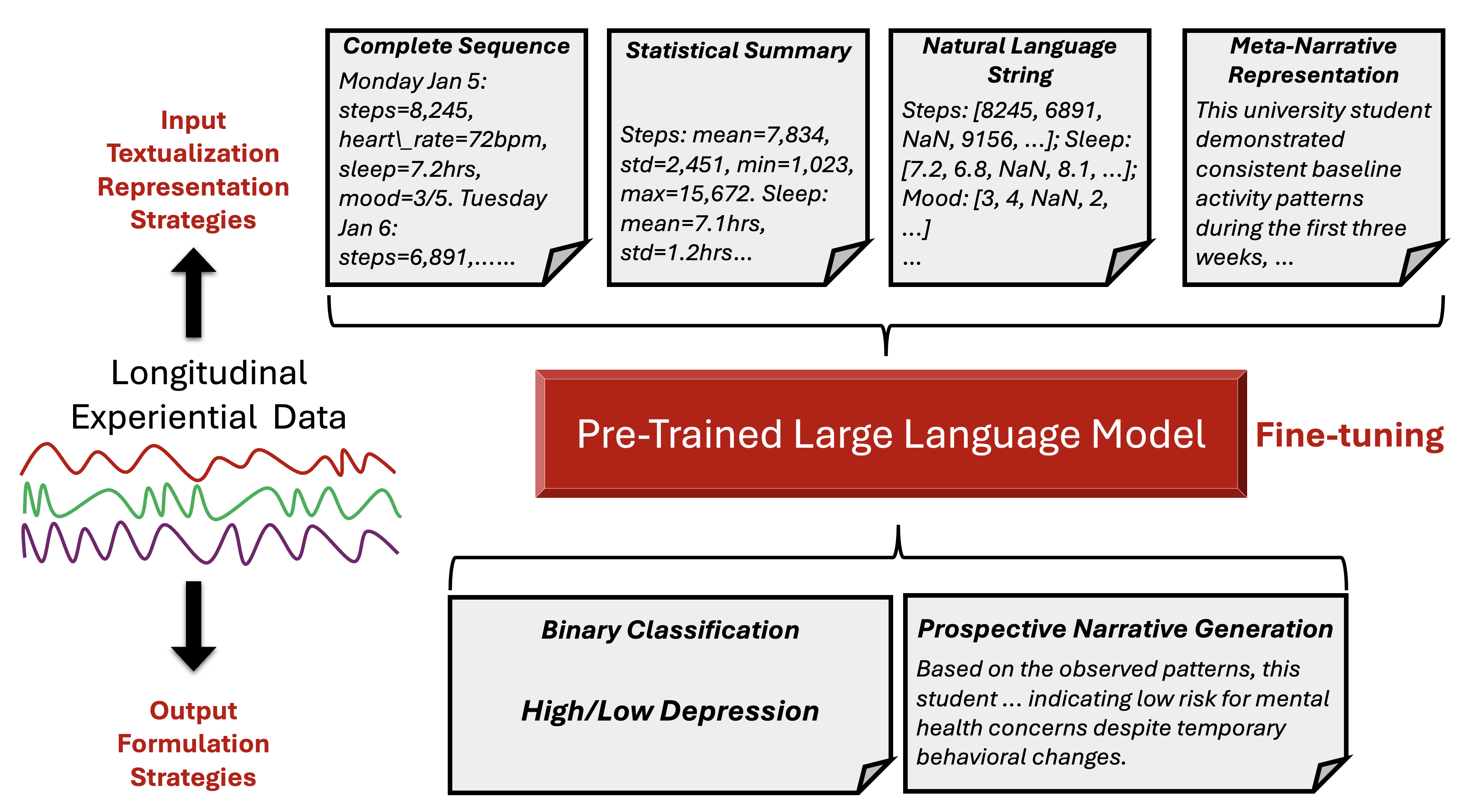
ConText-LE framework for representing longitudinal experiential data with language models
ConText-LENarrative-based language-model representations for longitudinal experiential data.
PRISM multimodal architecture combining temporal, text, and visual encoders
PRISMDirected cross-attention fusion across temporal, textual, and visual signals.

04 / Selected updates

Recent milestones

  • Cross-Distribution Generalization in Longitudinal Behavioral Data Through Frozen Coherence Constraints accepted to NeurIPS 2026.
  • Complementing Text Serialization with Visual Encoding of Structured Temporal Data for Cross-Distribution Generalization accepted to Findings of EMNLP 2026.
  • Joined Harvard Medical School and Brigham and Women's Hospital as a Postdoctoral Research Fellow.
  • From Numbers to Narratives accepted to Findings of EACL 2026.
  • Co-edited Industry 5.0: Emerging Paradigms for Business, Technology, and Society, published by CRC Press.
  • ConText-LE, on cross-distribution generalization for longitudinal experiential data, accepted to Findings of EMNLP 2025.